Those Pretty Wrongs

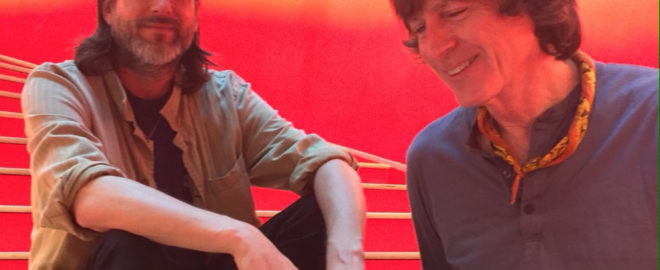
Those Pretty Wrongs, featuring Jody Stephens and Luther Russell, will perform in The Green Room at Crosstown Arts.

Doors at 7 pm | Show at 7:30 pm

Tickets: $15

After their self-titled 2016 debut, Jody Stephens did not assume that he and Luther Russell had a second Those Pretty Wrongs album in them. But that turned out to not be the case. The Memphis-Los Angeles duo released Zed For Zulu in the fall of 2019. After a few shows (including one at The Green Room at Crosstown Arts), they toured the U.K. with The Delines. The duo were gearing up for a West Coast U.S. tour with The Jayhawks and an Australia tour when Covid scampered those plans. Now they’re excited to finally resume with another show at The Green Room and the Jayhawks shows at the end of October. Jody and Luther are also working on their third album as well as readying a reissue of their first two LPs. Those Pretty Wrongs will be accompanied by a string section led by Jonathan Kirkscey.

Mempho presents Arlo McKinley

Doors at 7 pm | Show at 7:30 pm
Tickets: $20

Gifted singer-songwriter Arlo McKinley will release his debut solo record at age 40 on John Prine’s Oh Boy records — after he almost gave up on music altogether. His story is one of hope and sincerity, and he is living proof that great songs will reach the right ears eventually, even if it takes time.

McKinley’s Oh Boy Records solo debut, Die Midwestern, is deeply rooted in street soul, country, punk, and gospel and draws on personal stories, set against the backdrop of his hometown of Cincinnati, Ohio. It was crafted down river, in Memphis’ legendary Sam Phillips Recording Service, produced by GRAMMY Award-winning Matt Ross-Spang, with an all-star Memphis band of Ken Coomer, David Smith, Will Sexton, Rick Steff, Jessie Munson, and Reba Russell. There, McKinley recorded ten remarkable songs, some dating back fifteen years , all penned with weight, honesty, and gritty hope that comes from living in the rustbelt city where his songs were born.

Matt Ross-Spang stated, “I am in awe of Arlo’s songs and his dedication and embodiment of each one when he performs them. His willingness to bare it all on this record was more electric than the equipment used to capture it.”

Arlo McKinley is the last artist John Prine and his son Jody Whelan signed together to their label Oh Boy records.

Jody Whelan shared, “John was reserved in his praise for songwriters. I played him a couple of Arlo’s songs, and he heard “Bag Of Pills” and said, “That’s a good song,” which for him, was very high praise. He loved Arlo’s voice, this big guy with a sweet, soulful, gospel voice. He loved the dichotomy of the hard life lived, presented through such beautiful songs, and John was very excited about the promise of the album’s release.”

McKinley stated, “The feeling of knowing that a hero of mine took time out of his day to come see me perform is such an accomplishment in itself that if it all ended the next day, and I found out music just wasn’t in the cards for me, I would’ve still considered everything I have done as a success.”

On Die Midwestern, McKinley’s songs bleed truth and emotion from a heart scarred by wild nights and redeemed by soulful Sunday morning confessions. His lyrics are laid bare, stark and arresting in their honesty, and often penned from real-life experience. “Bag Of Pills” is an autobiographical and frank account of the drug issues which affect his hometown.

“I wrote it after I sold some pills so I could take a girl out. Those were rough times and also right around the time I started seeing real drug addiction very close to me. After watching so many friends die from drug abuse, it turned into me praying that it doesn’t get any worse while knowing that it will, resulting in my writing of the lyrics, ‘Life, I don’t want it if it’s so easy to die.’”

“Gone For Good” sees McKinley share his lessons from broken relationships.

“I wrote ‘Gone For Good’ after a serious, long relationship of mine ended. It’s about me realizing how short I fell on even trying to make it work.” Title track “Die Midwestern” reflects on McKinley’s love/hate relationship with Ohio, “I love it because it’s everything that I am, but I hate it because I’ve seen it take my loved ones lives. I’ve seen it make hopeful people hopeless.” McKinley reflects on his brutal honesty in his songs, “Songwriting has to be real. I’m 100% putting myself out there. I’m not writing fiction. To me, it is just about honesty. ”

By age 8, McKinley was singing at his family’s church, Bethlehem United Baptist, where he first saw the light of music. Early musical loves outside church were his Kentucky native father’s bluegrass and timeless country records of Hank Williams, Sr., as well as, Bob Dylan, John Prine, Otis Redding, and George Jones. Then his two older brothers’ punk and metal collection drove him to throw himself raw onto the Cincinnati punk scene.

“I grew up in the punk scene with my brothers, and dad has all of that stuff that came out of King Records like Hank Williams, and I was just surrounded by it,” McKinley says. “I still take parts of it, and I feel I write songs in a punk rock way.”

With concert covers ranging from Johnny Paycheck and The Misfits to Rihanna and Post Malone, McKinley shows a diverse range of musical interest, which he attributes to the musical melting pot of the Cincinnati scene.

“You go back to the history of Cincinnati music, and you can see and feel that the river back then connected everything, and it all flowed into one spot and brought all kinds of music here,” says McKinley, adding, “That’s why I think this town has never been known for one kind of music because so many things came through here.”

He pursued a solo career in 2014 with his own band The Lonesome Sound and achieved some success, including a nomination for Album of the Year, Songwriter of the Year, and Best Americana Act from the Cincinnati Music Awards, but his career stalled and he almost gave up altogether.

“I don’t know why the world works the way it does, but I’m beyond grateful to be in this situation.” McKinley stated, adding, “ I’m a little wiser in my ways and a 20-something me would’ve found a way to destroy the one dream that has stuck with me my entire life — being a working musician.”

He also almost missed his big break, which came when he was offered an opening slot for Tyler Childers and his now-manager was trying to reach him on the phone to offer him an opening slot. Arlo initially dodged the persistent unknown caller. Eventually, they connected after a friend hit him up on social media and he took the call.

“My buddy was like, ‘Arlo, Tyler’s team is trying to get hold of you.’ I don’t know where I would be if I didn’t take that call. Still delivering tuxedos, which was my side job before I was a full-time musician.”

Since, McKinley has been making a name for himself around the country, humbly sharing stages with kindred musical spirits John Moreland, Jason Isbell, Justin Townes Earle, and contemporary rising singer/songwriters Ian Noe and Colter Wall, eventually attracting the attention of Oh Boy, who signed him in March 2020.

McKinley reflects on the significance of the timing of his release, stating, “I only met John briefly, and I would’ve loved to have sat with John and talked music, which I’m sure would’ve happened, but I treasure the moment we had together when he came to see me play a show. His passing was a major knockdown blow for the entire team. I’m sure John had a vision for Oh Boy Records, and I’m proud and honored to be able to contribute to the labels continued legacy.”

McKinley’s Die Midwestern remains an album of hope, and he knows first-hand how his music can connect with his growing audience.

“I had a guy who was dealing with brain cancer walk up to me and say that he was done with it, but something in my songs resonated with him and made him get out and start living even though he knows what is ahead of him. Nothing is more important than that. That’s why I write songs like I do. I’m just another lost, hurting person in this place. I just like to sing about it.”

POSTPONED Morgan James: Memphis Magnetic Tour at Crosstown Arts

** This event is postponed until further notice.

Crosstown Arts presents Morgan James’ Memphis Magnetic Tour in The Green Room.

Tickets: $20 General Admission | $50 VIP with artist meet & greet
Doors at 7 pm | Show at 7:30 pm

Memphis Magnetic is the third studio album from soul singer Morgan James. This album is a love letter to one of the great American birthplaces of soul. Rooted in her love of Aretha Franklin, Al Green, and Otis Redding, Morgan James delivers as only she can. The Memphis Magnetic Tour will be a feast for the ears and the heart, from the soul of a great artist with a love for what is real and true in American music.

Let’s start with the voice, an instrument through which she can communicate anything. A gift bestowed upon her that she has expertly trained, meticulously nurtured, and passionately galvanized into action by an urgency to make real music. Next, the stories, and she has them in spades. They are full of truth and beauty, heartache and thoughtfulness. They reveal colors we weren’t expecting to see. They make us close our eyes and relate. And finally, the soul – the emotional and intellectual energy through which these parts are fueled. That special something that prompted The Wall Street Journal to herald her as “the most promising young vocalist to come along so far this century.” That young vocalist is Morgan James. And Morgan James is a soul singer.

Armed with her dedication to create authentic soul music, James and her husband Doug Wamble, her producer, co-writer, and arranger, spent months writing twelve new songs in New York City. “Doug and I have always wanted to make a classic record like this,” she says. “Doug is originally from Memphis and we are both so inspired by the roots of classic soul music. Being entrenched in a place like that really informs everything you make there.” So, instead of recording in New York, she aimed straight for the source and booked a week at a new music studio in Memphis, at the recommendation of drummer George Sluppick.

She immediately connected with the space: Memphis Magnetic, a renovated old bank transformed into a classic recording studio, decked out with a collection of vintage Nashville gear by owner Scott McEwen. The space exemplified exactly what James wanted her album to be: something new through the prism of something old. She and Wamble assembled a group of local musicians, including Sluppick, organist Al Gamble, bassist Landon Moore, and pianist Alvie Givhan. They tapped legendary Memphis musicians Reverend Charles Hodges and Leroy Hodges, who were the backbone of the Hi Records rhythm section, which played with Al Green and Ann Peebles, to contribute to two tracks. And finally, the team was rounded out with a classic Memphis horn section, plus the amazing Memphis String Quartet.

“What I’ve learned over the years is to hire great people and let them do what they do best,” says James. “We came in with all the music charted and ready and left space for people to be themselves and infuse it with their own magic. I really wanted every single person involved in the album to be from Memphis and to channel the great albums I admire so much. From every end of the spectrum, in every department, it felt like the right people.”

The entire album was recorded to analog tape, a first for James. She wanted to be less precious about the process overall and to capture the same invigorated feeling as her live performances. Much of the album comes from single, complete takes, giving it a vibrant, in-the-moment sensibility. The songs on the album range in tone, but there’s a hopeful, life-affirming feeling that threads through the tracks. The playful “I Wish You Would” takes its cues from “Mr. Big Stuff,” while “All I Ever Gave You” looks back on losing someone after endless sacrifices. The album also features two duets, another first for James, with Marc Broussard and three-time Grammy nominee Ryan Shaw. The collaboration with Shaw, “I Don’t Mind Waking Up (To A Love This Good)” is the first single and a song James calls one of her favorites she’s ever written. And a standout moment comes on the closing track “Who’s Going to Listen To You? (When You’re Crying Now),” a song James and Wamble wrote with lyrics from a poem by Spin Doctors’ lead singer Chris Barron. It creates a poignant and heart-wrenching final note for the album, a collection of genuine, satisfying songs that embrace the best of American songwriting. The experience was so inspiring and affirming that James ended up titling the album Memphis Magnetic after the studio where it was made (an homage to Jimi Hendrix and his Electric Ladyland).

For James, Memphis Magnetic is the culmination of a life-long love affair with music. She grew up listening to everyone from Joni Mitchell to Paul Simon to Prince to Aretha Franklin, cultivating an insatiable love for strong songwriters. After graduating from The Juilliard School with a classical music degree, and performing in the original companies of four Broadway productions, James began writing and recording her own music. Meeting her mentor Berry Gordy, Jr. led to a record deal at Epic Records, where she recorded and released her solo album Hunter in 2014. In addition to her studio albums, James recorded and released a full album cover of Joni Mitchell’s seminal Blue as well as The Beatles’ White Album in 2018 to celebrate the 50th anniversary. Through her unique and varied career, there have been many ups and downs, but James cites her failures as more important than her successes in shaping the artist she is today.

After her tenure with Epic Records, she took charge of her career from the business side as well. She cultivated a new world of fans with her viral YouTube videos, and while connecting with them on social media and at her live shows, she found the support and strength to go out on her own as an independent artist. Over the last several years, James has built her own empire and established herself as a touring powerhouse, allowing her to raise the funds to create her albums and make every decision from the ground up.

“This album feels so unburdened by anybody or anything. All of the songs were written for this project. They were recorded in the same way, in the same room. It’s a moment in time captured. I felt like I was a part of the lineage of soul music. My guiding force throughout the record was ‘What would Aretha say? What would Otis say?’ It’s not a retro album or a throwback by any means. This album is me: classic elements, timeless melodies, and lyrics from my soul and experience. We need that right now. We need real music now more than ever.”

POSTPONED Tonya Dyson is Sarah Vaughan

** This event is postponed until further notice.

Join us in The Green Room at Crosstown Arts for a special performance by Tonya Dyson in a tribute to the legendary Sarah Vaughan.

Tickets: $10
Doors at 7pm | Show at 7:30pm

Tonya Dyson wears so many hats: non-profit arts executive, music educator, serial entrepreneur, community leader, and festival organizer. You name it. She’s also a beloved artist who has not only built a devoted following in a creative landscape of her own design but has helped develop and nurture that same environment for countless other Memphis artists. She’s the genuine article in Memphis’ new soul underground. Join Tonya as she pays tribute to one of her favorite artists, the legendary Sarah Vaughan.

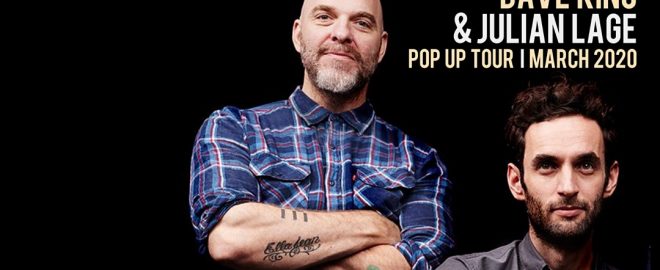
Dave King & Julian Lage in The Green Room

Join us in The Green Room at Crosstown Arts for a performance by guitarist Julian Lage and drummer Dave King.

Tickets: $20
Doors at 7 pm | Show at 7:30 pm

Hailed as one of the most prodigious guitarists of his generation, Julian Lage has spent more than a decade searching through the myriad strains of American musical history via impeccable technique, free association, and a spirit of infinite possibility.

Though only 31, the New York-based musician boasts a long, prolific resume that includes collaborations with Gary Burton, John Zorn, Nels Cline, Chris Eldridge, Fred Hersch, David Grisman, Béla Fleck, and Charles Lloyd.

Love Hurts , which marks his first album to feature drummer Dave King (The Bad Plus), sees the GRAMMY-nominated guitarist exploring the American song catalog from a truly unique vantage point, performing music written by a range of audacious and original artists, from Roy Orbison to Ornette Coleman, Jimmy Giuffre to Peter Ivers.

Love Hurts finds Lage searching through the unfettered artistic freedom of the late 1960s and 1970s, the ambitious energy and lack of restrictions placed upon artists of all genres providing a guiding light for the sessions. “The covers on this record are like when you move into a new apartment; the last thing you do is hang your pictures on the wall,” Lage says. “Those pictures define your aesthetic in a way. So the tunes we chose kind of define the aesthetic I love but hadn’t put on a record yet.”

The impetus for Lage to delve deeper into his own improvisational influences was initially catalyzed by a series of 2018 live dates that saw him and bassist Jorge Roeder joined by Dave King, composer and drummer extraordinaire with The Bad Plus.

“Dave was like the most beautiful curveball being thrown in,” Lage says. “He’s one of the greatest improvising forces and artistic visionaries. We became close friends over the last couple of years. We played some shows together and I thought, this is really heavy. He brings something out in Jorge and I that is native to the music we grew up playing but doesn’t always get prompted in this particular way. I thought, this is someone who can do it all. He can light that fire as a player and he can help us formulate a strong collective vision.”

POSTPONED Willie Farmer with Tim Easton in The Green Room

This event is postponed until further notice.

Join us in The Green Room at Crosstown Arts for a performance by Mississippi bluesman Willie Farmer, with an opening set by Tim Easton.

Tickets: $15
Doors at 7pm | Performance at 7:30pm

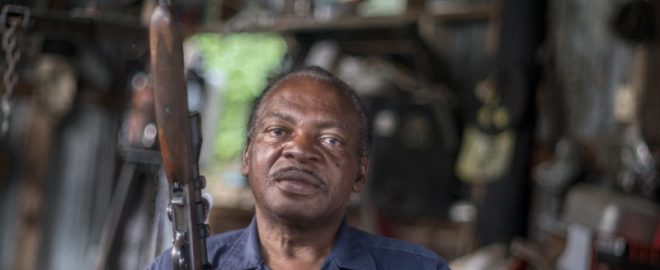
Willie Farmer is living proof that Mississippi continues to produce deep blues. The 63-year-old guitarist is neither a soul modernist nor revivalist, but simply a small-town auto mechanic who’s never shaken his love for old school legends like Muddy, Wolf, and Lightnin’.

A lifelong resident of tiny Duck Hill, located in the hills east of the Delta, Farmer grew up on the family farm. He first took up the acoustic guitar in his early teens, and through picking cotton, soon saved up enough money to buy an electric instrument.

He played for audiences at home and at school events and learned about blues and R&B, mostly through listening to a powerful station out of Nashville. “John R of WLAC, that’s how I listened to Lightnin’ Hopkins, Howlin’ Wolf. That’s how I got my first album by Lightnin’ [The Fire Records LP Mojo Hand]. I got the address off the radio, and they sent it.”

“I learned Lightin’ pretty good. I can play all the up-to-date stuff now — B.B., Little Milton — but I like the old stuff; that’s the real blues. The blues they’re singing today, that ain’t blues to me; it just doesn’t have the feel.”

Willie’s father Alex, a harmonica player who helped young Willie tune his guitar, had played as a young man with his brothers, including Walter, who was recognized as one of the best guitarists to come out of the area.

In the early ‘50s, Walter played together with Leo “Bud” Welch, who grew up in the region. Sadly, Walter was killed in Chicago in 1964 — “a woman liked Walter, and a man got jealous and killed him” — and Willie never heard him play.

In his early ‘20s, Farmer joined a loos- knit band that played at juke joints across the area — in Duck Hill, Grenada, Kilmichael, and down in the Delta in Greenwood and Charleston. He eventually tired, though, of the rough-and-tumble clubs where “people liked to fight like crazy. ”

For about fifteen years, Farmer worked regularly with local semi-professional gospel groups, including the Rising Sun Singers, who appeared on TV and over the radio in Greenwood, the Angelettes, and, for nine years, the Grenada-based Silvertone Gospel Singers. In 2003, he helped found the annual Grassroots Blues Festival, staged in a meadow outside Duck Hill. Through the event, he befriended down-home blues players from across the state, including Willie King and Welch.

“The Man From the Hill” marks the first time that he’s spent serious time in the studio. Recorded over multiple sessions at Producer Bruce Watson’s Memphis based Delta-Sonic Sound Studio. Farmer enjoyed working in a North Mississippi Hill Country vein with Jimbo Mathus and session drummer George Sluppick. He even dipped back into gospel, singing harmony together with Memphis’ Barnes Brothers on [the Sensational Nightingales’] “At the Meeting.”

For the past 30 years, Farmer has run his own auto repair shop and hopes that the release of this record and associated touring will allow him to retire.

“I’m trying to get out of that shop. I’m tried of messing with those cars. It’s been a long time.”

To celebrate 30 years of traveling with and writing songs on his black Gibson J-45 acoustic guitar named ”Paco,” Nashville-based songwriter Tim Easton recorded an entire album direct-to-lacquer at The Earnest Tube Studio in Bristol, Virginia. This performance-based method of capturing songs leaves no room for manipulation or overdubbing, therefore conjuring the roots of American Music. Each track was recorded via portable lathe, which cuts a mono signal directly to a lacquer acetate disc, much the way The Carter Family or Jimmie Rodgers would have made their first records in Bristol over 90 years ago.

In as much time as it takes to listen, Easton recorded nine original songs and one cover using a single 1940s RCA 74B ribbon microphone, alternating between the rapid fire flat-picking and steady, Travis-style thumb-picking technique that he has been streamlining all these years, coupled with his Country Blues style rack harmonica playing. The occasional foot stomp can be heard as well, vibrating through the floors. Easton sings songs from the personal experiences and observations of man who has spent a few decades on the road. His folk music is not always the gentle kind. His authenticity is pervasive. This is what the tradition of the troubadour sounds like.

This LP serves as a love letter of sorts to Easton’s trusty Gibson acoustic guitar, which he purchased in 1987 for $100, plus two cheap electric guitars on trade. Leaving Ohio and exploring Europe on and off for seven years, Easton traveled extensively by train, bus, and thumb, learning to write songs along the way. Soon after a Deadhead in Paris named his guitar “Paco,” Easton made his first recordings just a short walk away from the Charles Bridge in Prague, where he had been busking in the Summer after Czechoslovakia’s Velvet Revolution.

After returning Stateside and signing with EMI Music Publishing, he released several critically acclaimed albums with both New West Records and Thirty Tigers. His last album, 2016’s American Fork (Last Change Records) reached #11 on the Americana Music Association Radio Charts. Easton continues to travel the world and perform while also delving into film score work done at his home studio in Nashville. He has scored two feature documentaries, “The Power Of Two” (2012), and “The Bullish Farmer” (2017) and also placed original songs in film and television. The American South has left it’s emotional and sonic mark on many a traveler, and it shows in Easton’s range of performances on this unique LP.